


Money matters do not always end when life does. After someone passes away, families are often left dealing with accounts, bills, and financial paperwork during an already difficult time. That is why many people ask what happens to credit card debt when you die.
A common fear is that loved ones automatically inherit unpaid balances. In reality, debt after death usually follows legal and financial rules that depend on the type of debt, the person’s assets, and how accounts were set up.
The good news is that family members are not always personally responsible for someone else’s debt. In this article, we’ll explain in simple words what happens to credit card balances, what happens to debt when you die, and what families should know next.
What Happens to Credit Card Debt When You Die
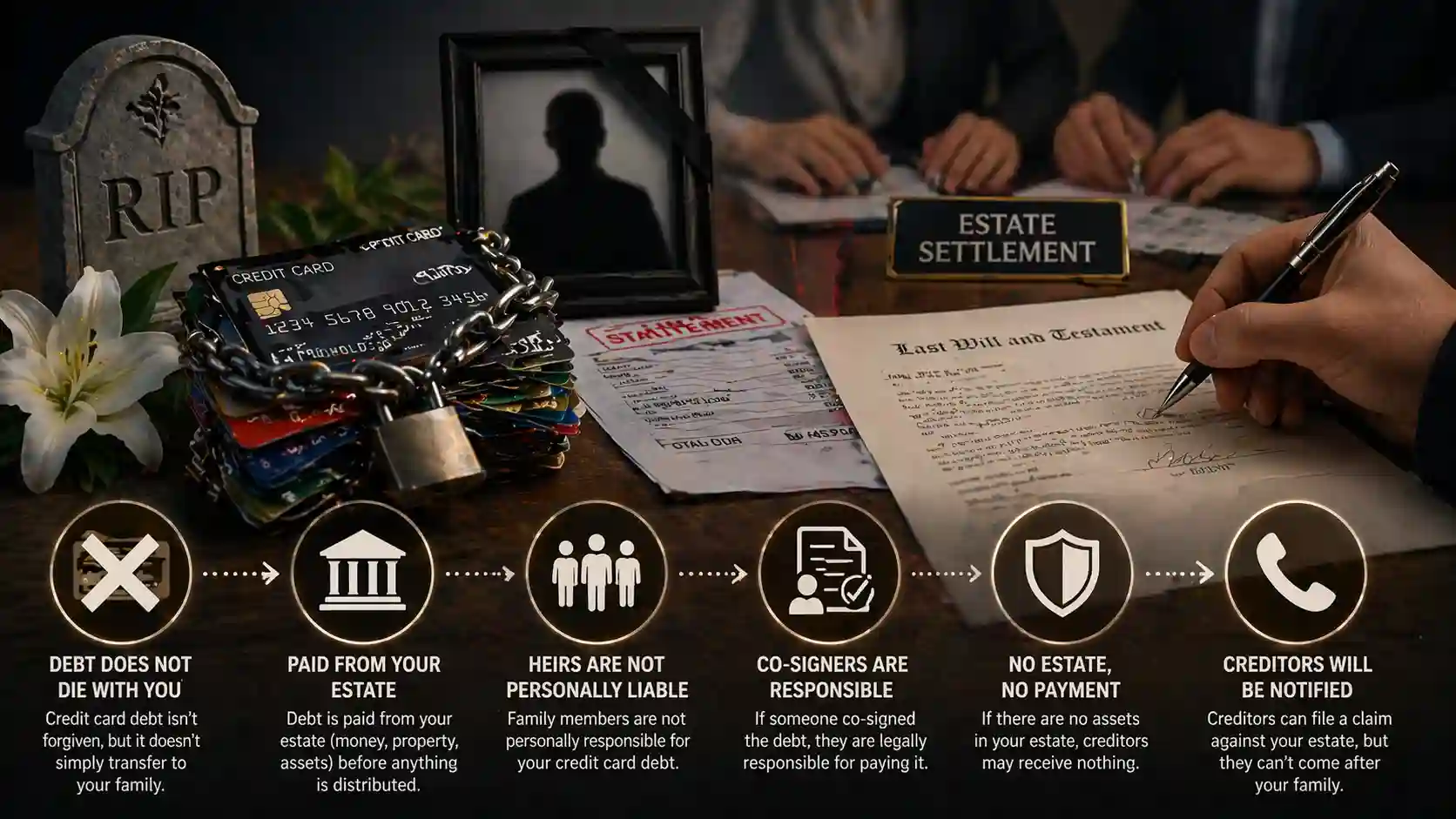
In most cases, credit card debt does not simply disappear, but it also does not automatically transfer to family members. To understand what happens to credit card debt when you die, the unpaid balance is usually handled through the person’s estate.
An estate is the money, property, and assets a person leaves behind. Before heirs receive inheritances, debts and final expenses may be paid from those assets according to the law.
If enough money exists in the estate, the credit card company may receive payment. If there is not enough money, the lender may only recover part of the balance or nothing at all.
What Usually Happens:
- The estate is reviewed
Assets and debts are identified. - Creditors may make claims
Credit card companies can request payment. - Debts may be paid before inheritances
This often happens during estate settlement. - Unpaid balances may remain
If assets are limited, full repayment may not happen.
Important Note:
Laws vary by location, and certain account types can change the result. But in many situations, the first source of payment is the estate, not relatives.
This explains what happens to credit card debt when you die in the most common scenario.
What Happens to Debt When You Die
Debt after death is usually handled through the estate, but not all debts work the same way. This is an important part of what happens to debt when you die, because credit cards, loans, medical bills, and mortgages may each be treated differently.
When someone passes away, their assets and debts are reviewed. The person managing the estate may use available funds to pay valid claims before remaining assets are distributed to heirs.
Some debts are secured by property, while others are unsecured. This can affect what happens next.
Examples of How Different Debts May Be Handled:
- Credit card debt
Often paid from estate assets if funds are available. - Mortgage debt
Connected to the home, so payments or sale decisions matter. - Car loan
Linked to the vehicle, which may be kept or surrendered. - Medical bills
May be submitted as claims against the estate. - Personal loans
Often treated based on contract terms and estate funds.
Why It Matters:
This broader view helps explain what happens to debt when you die because each type of debt may follow different rules.
The final outcome depends on assets, account setup, local law, and whether another person also signed for the debt.
Are Family Members Responsible for the Debt
In many cases, family members are not automatically responsible for paying someone else’s personal debt after death. This is one of the biggest misunderstandings connected to what happens to credit card debt when you die.
Just being a spouse, child, or relative does not always mean you must pay the balance from your own money. Usually, the first source for payment is the estate.
However, there are exceptions. Responsibility can depend on local laws and how the account was set up.
Situations Where Someone May Be Responsible:
- Joint account holder
A true joint borrower may still be responsible. - Co-signer
If someone guaranteed the debt, they may owe it. - Certain state or marital laws
Some places treat marital debt differently. - Shared secured loans
Joint loans tied to property may continue.
Situations Where They Often Are Not Responsible:
- Adult children with no connection to the account
- Relatives who were only authorized users
- Family members who never signed the agreement
Important Reminder:
Collectors may contact family to locate the estate representative, but that does not automatically mean personal liability exists.
This helps explain why many families worry unnecessarily about debt after a death.
What Happens to Your Debt When You Die if There Is No Money
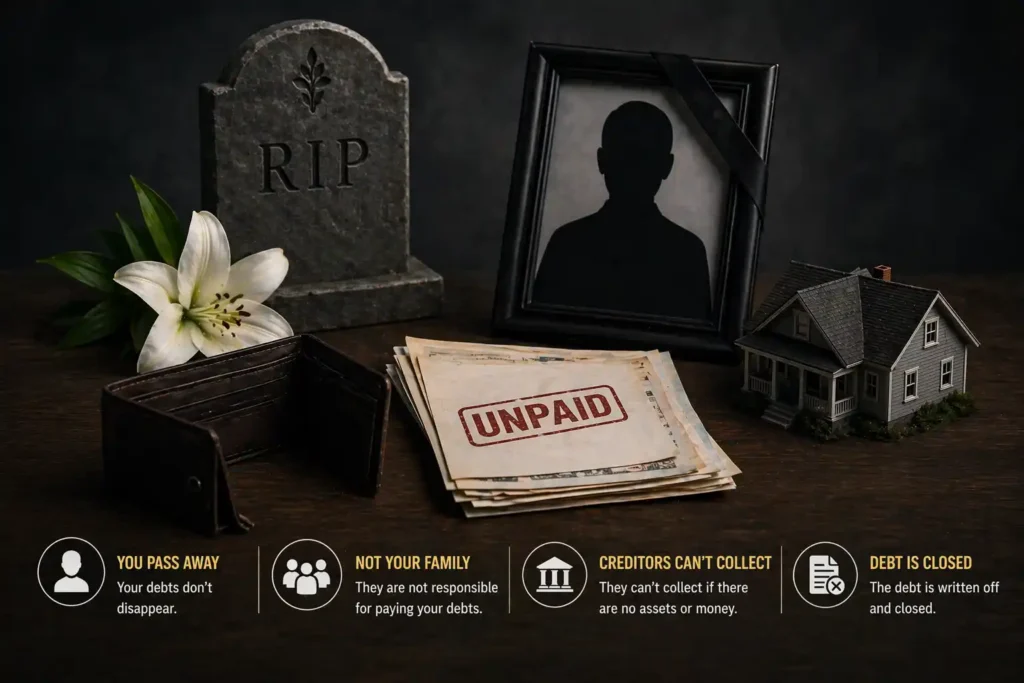
If a person dies with debt but leaves little or no money behind, the situation is often called an insolvent estate. This is an important part of what happens to your debt when you die, because not every estate has enough assets to pay every bill.
When this happens, debts are usually handled according to legal priority rules. Some expenses may be paid first, while lower-priority creditors may receive only part of what they are owed or nothing at all.
In many cases, family members do not have to cover these unpaid debts from their own personal money unless they were legally connected to the account.
What Usually Happens:
- The estate is reviewed
Assets, accounts, and debts are identified. - Priority expenses may be paid first
Certain legal or final costs may come before other debts. - Some creditors may go unpaid
If no money remains, balances may remain unpaid. - Heirs may receive little or nothing
Debts can reduce what is left to inherit.
Why This Matters:
This explains what happens to your debt when you die when there are not enough assets. The debt does not always move to relatives simply because the estate cannot pay.
The final result depends on local law, account type, and who was legally responsible.
What About Joint Accounts and Co-Signers
Joint accounts and co-signed debts can change the normal outcome after death. This is a key part of what happens to credit card debt when you die, because when another person legally shares the account, responsibility may continue.
Many people confuse an authorized user with a joint account holder. They are not always the same thing. A joint holder may share legal responsibility, while an authorized user often only had permission to use the card.
Co-signers can also be different from regular family members because they agreed to help repay the debt if needed.
How Responsibility May Change:
- Joint account holder
May remain responsible for the balance. - Co-signer
May be required to repay under the contract. - Authorized user
Often not personally liable in many cases. - Shared loans
Joint mortgages or car loans may continue with the surviving borrower.
Why This Is Important:
The name on the paperwork matters more than the family relationship. Legal responsibility often depends on who signed the agreement.
Because account rules vary, reviewing statements and contracts is a smart next step.
How Credit Card Companies Collect After Death
After a person passes away, credit card companies usually do not collect in the same way they would from a living account holder. Instead, they often submit a claim against the estate. This is an important part of what happens to credit card debt when you die, because the estate process often controls repayment.
The person managing the estate may notify creditors, gather financial records, and review valid balances. If funds are available, approved debts may be paid according to legal priority rules.
Creditors may also contact family members to identify the executor or estate representative. That does not always mean the family personally owes the debt.
What the Process Often Looks Like:
- Account is reported after death
The lender is notified. - Claim may be submitted
The creditor requests payment from the estate. - Debt is reviewed
Balances and account details are checked. - Payment depends on estate assets
If funds exist, some or all may be paid.
Important Reminder:
Families should be cautious about paying from personal funds before understanding legal responsibility.
This process explains why debt collection after death is often tied to estate settlement rather than immediate family payment.
What Families Should Do After a Death
After losing a loved one, financial tasks can feel overwhelming. Taking organized steps can make the process easier and reduce confusion. This is an important part of what happens to debt when you die, because handling accounts properly can protect the family and the estate.
There is usually no need to rush into paying bills from personal money before understanding what is owed and who is responsible.
Start by gathering information and identifying the person who will manage the estate.
Helpful First Steps:
- Collect important documents
Death certificate, account statements, insurance papers, and will. - Notify banks and lenders
Inform companies about the death. - Identify the estate representative
The executor or administrator may handle matters. - Make a list of debts and assets
Understand the full picture. - Keep records of calls and letters
Good documentation can help later.
What to Avoid:
- Paying debts from personal funds too quickly
- Ignoring official notices
- Guessing who is legally responsible
Why This Matters:
Careful steps can prevent mistakes and reduce stress during a difficult time.
Being organized early often makes the estate process smoother for everyone.
How to Prepare Your Finances in Advance
Planning ahead can make things much easier for loved ones later. This is an important lesson connected to what happens to your debt when you die, because clear records and smart planning can reduce stress, delays, and confusion.
Many families struggle not only with debt, but with missing information. A little preparation now can save major problems later.
Good planning does not need to be complicated. Even simple steps can help protect your family and make estate matters easier to manage.
Smart Ways to Prepare:
- Keep a list of accounts
Credit cards, loans, insurance, and key contacts. - Create or update a will
Clear instructions can help your family. - Review beneficiaries
Check insurance and financial account details. - Reduce high-interest debt when possible
Lower balances can reduce future stress. - Share important information securely
Let a trusted person know where records are kept. - Consider life insurance or savings goals
These may help cover final costs.
Why It Helps:
Preparation can make estate settlement faster and reduce uncertainty for the people you care about.
Planning ahead is one of the best ways to protect family members from unnecessary stress later.
FAQs
1. What happens to credit card debt when you die?
It is often paid from the estate if assets are available.
2. What happens to debt when you die if there is no money?
Some debts may remain unpaid if the estate has no assets.
3. What happens to your debt when you die—do children inherit it?
Usually children do not automatically inherit personal debt.
4. Can a spouse be responsible for credit card debt?
Sometimes, depending on account setup and local law.
5. Should families pay bills right away?
It is wise to understand legal responsibility first.
Conclusion
Credit card debt after death is usually handled through the estate, not automatically passed to relatives. Whether balances get paid often depends on available assets, account setup, and local laws.
Understanding what happens to credit card debt when you die can help families make better decisions during a difficult time. In many cases, family members are not personally responsible unless they jointly held or guaranteed the debt.
