


Renting a home or apartment usually comes with a lease agreement that lasts for a set period of time. But life does not always go as planned. Job changes, family issues, financial stress, or moving to a new city can make someone leave earlier than expected. That is why many renters ask what happens if you break a lease.
Breaking a lease means ending the rental agreement before the official end date. In some cases, this can lead to fees, unpaid rent, or problems with your rental history. In other situations, local laws may give tenants legal rights to leave early.
The good news is that breaking a lease does not always lead to the worst outcome. Much depends on your lease terms, communication with the landlord, and the reason you need to move. In this article, we’ll explain in simple words what can happen, possible costs, and how to reduce problems if you need to leave early.
What Happens If You Break a Lease
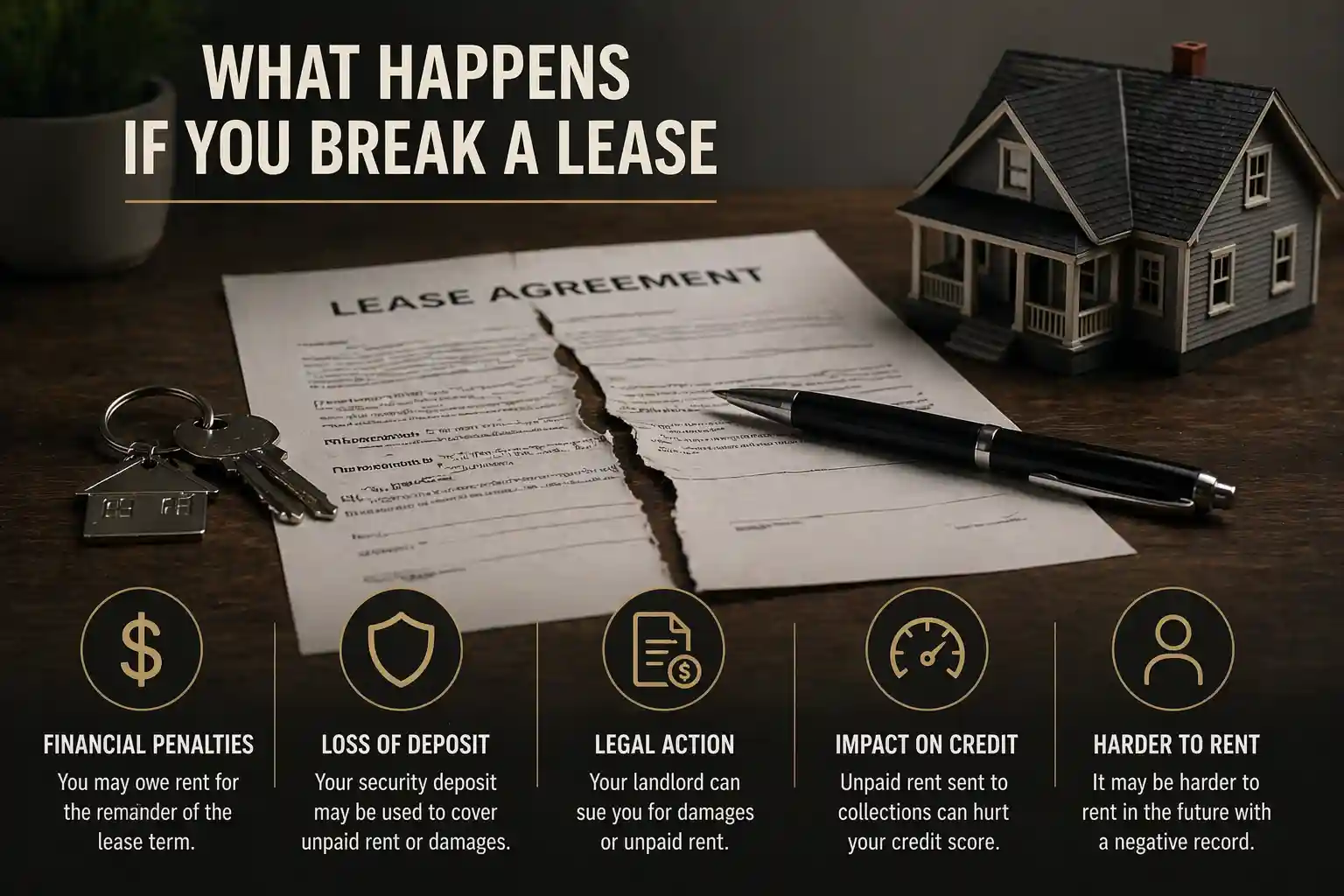
If you break a lease, the result usually depends on your rental agreement, local laws, and how the landlord responds. In simple terms, breaking a lease means leaving before the contract officially ends. Because a lease is a legal agreement, ending it early can create financial or legal consequences.
Many landlords rely on lease payments for steady income. If a tenant moves out early, the landlord may try to recover lost rent or charge early termination fees. However, not every case ends badly. Some landlords prefer to find a new tenant quickly instead of starting a dispute.
This is why what happens if you break a lease can be very different from one renter to another. A cooperative conversation with the landlord may solve the issue faster than expected.
Common Outcomes of Breaking a Lease:
- Early termination fee
Some leases include a fixed fee for leaving early. - Loss of security deposit
Part or all of the deposit may be used. - Responsibility for unpaid rent
You may owe rent until a new tenant moves in. - Damage to rental references
Future landlords may ask about past leases. - Mutual agreement to end the lease
Some landlords allow a clean exit with notice.
The best first step is always to read your lease carefully and speak with the landlord before moving out.
Common Financial Penalties for Breaking a Lease
One of the biggest concerns renters have is money. In many cases, the main consequence of ending a lease early is financial cost. This is an important part of what happens if you break a lease, because even if you move out, the lease may still create payment obligations.
The exact amount depends on the lease terms, how much time is left, and whether the landlord can quickly rent the property to someone else. Some landlords follow the contract strictly, while others are willing to negotiate.
Many renters are surprised to learn that moving out does not always end the rent immediately. If the unit stays empty, you may still owe money for some period.
Common Costs You May Face:
- Early termination fee
Some leases charge one or two months of rent. - Remaining rent payments
You may owe rent until a new tenant is found. - Loss of security deposit
The deposit may be used for unpaid balances. - Advertising or re-renting costs
In some cases, extra fees may be requested. - Late fees or collections
Unpaid balances can grow over time.
Why Costs Differ:
A landlord in a high-demand area may replace you quickly, reducing what you owe. In a slower rental market, the cost could be higher because the unit remains empty longer.
Understanding these possible costs can help you plan before making a final decision.
Can a Landlord Sue You After Breaking a Lease
Yes, in some situations a landlord may choose to take legal action after a tenant breaks a lease. This usually happens when there is unpaid rent, damage to the property, or unpaid fees connected to the early move-out. It is an important part of what happens if you break a lease, especially when communication breaks down.
However, not every broken lease ends in court. Many landlords prefer to settle the issue by finding a new tenant, creating a payment plan, or reaching a written agreement. Legal action often takes time and money, so some owners avoid it unless the amount owed is significant.
Whether a lawsuit happens can depend on local laws, the amount of money involved, and how willing both sides are to cooperate.
Reasons a Landlord Might Sue:
- Unpaid rent after move-out
If money is still owed under the lease. - Property damage beyond normal wear
Major repairs may become part of a claim. - Broken contract terms
Leaving without notice may create extra issues. - Collection of fees
Early termination charges or other unpaid amounts.
How to Lower the Risk:
Keep records, give notice in writing, communicate respectfully, and try to reach an agreement before leaving. Many disputes become easier when handled early.
So yes, a lawsuit is possible, but many lease issues are resolved without going to court.
How Breaking a Lease Can Affect Your Rental History
Breaking a lease can sometimes affect your future housing options. This is an important part of what happens if you break a lease, because many landlords check rental history before approving a new application.
When you apply for another apartment, a future landlord may ask for previous addresses, references, or rental records. If a past lease ended badly, it could raise concerns.
Not every broken lease creates a serious problem. If you gave notice, paid what you owed, and left the property in good condition, the impact may be small. But unpaid balances or disputes can cause bigger issues.
Possible Effects on Rental History:
- Negative landlord reference
A previous landlord may mention early move-out problems. - Harder approval process
New landlords may ask more questions. - Higher deposit requests
Some landlords may want extra security. - Collections or credit issues
Unpaid lease balances can create larger problems.
How to Protect Your Rental Record:
Pay agreed amounts, keep written proof, leave the unit clean, and request a neutral or positive reference if possible.
A clean exit often matters just as much as the fact that you moved early.
Legal Reasons You May Be Allowed to Leave Early
Sometimes tenants can legally end a lease without the normal penalties. This is a very important part of what happens if you break a lease, because not every early move-out is considered a simple broken contract.
Many places have laws that protect renters in certain situations. The rules depend on where you live, so local law matters a lot.
If the property is unsafe, the landlord seriously fails to maintain the home, or a tenant faces a protected emergency, the tenant may have stronger rights to leave early.
Common Situations That May Allow Early Exit:
- Unsafe or unlivable housing
Serious issues like no heat, dangerous wiring, or major health hazards. - Landlord fails required repairs
Especially after proper notice. - Military orders
Some service members have legal protections. - Domestic violence protections
Many places offer special rights for safety reasons. - Other local legal protections
State or city rules may create additional rights.
Important Note:
Even when you have a legal reason, it is smart to document everything, give written notice, and follow required procedures.
Because laws vary, checking local tenant rules or legal advice can be very helpful.
What to Do Before Breaking a Lease
Before moving out early, it is smart to slow down and plan carefully. This can reduce stress, save money, and protect your rental record. This is one of the most useful parts of what happens if you break a lease, because the steps you take before leaving often shape the final outcome.
Many lease problems become worse when tenants leave suddenly without notice. A better approach is to understand your contract and talk to the landlord first.
Sometimes landlords are more flexible than renters expect, especially if you communicate early and respectfully.
Smart Steps to Take First:
- Read your lease carefully
Look for early termination rules, notice periods, and fees. - Talk to your landlord early
Honest communication may lead to options. - Give written notice
Written records are important. - Ask about replacement tenants
A new renter may reduce what you owe. - Document the property condition
Photos can help protect your deposit.
Why This Matters:
Planning first can turn a costly conflict into a manageable move. Even small preparation can make a big difference.
Breaking a lease is easier to
How to Reduce the Cost of Breaking a Lease
If you need to move early, the goal is often to lower the financial damage. This is a major part of what happens if you break a lease, because many renters assume they must pay the maximum amount. In reality, there are often ways to reduce costs.
Landlords usually want the unit rented again as soon as possible. If you help make that happen, they may be more willing to work with you.
Being cooperative, organized, and respectful can sometimes save a lot of money.
Ways to Lower the Cost:
- Give as much notice as possible
More notice gives the landlord time to plan. - Help find a replacement tenant
If allowed, this may shorten your liability. - Negotiate an exit agreement
Some landlords accept a smaller fixed fee. - Leave the property clean and undamaged
This can protect your deposit. - Pay what you reasonably owe quickly
Fast payment may prevent extra fees or collections.
Why Negotiation Helps:
A landlord may prefer certainty now rather than chasing larger payments later. That can create room for compromise.
Even when breaking a lease is expensive, smart action can often reduce the total cost.
Is Breaking a Lease Ever Worth It
Sometimes, yes. Breaking a lease can be costly, but there are situations where leaving early may still be the better decision. This is an important final part of what happens if you break a lease, because money is only one part of the choice.
If staying creates serious stress, safety concerns, job loss, family hardship, or an unavoidable move, paying some cost now may be better than staying trapped in a bad situation.
The right decision often comes from comparing short-term cost with long-term benefit.
When It May Be Worth It:
- Better job opportunity in another city
Income growth may outweigh lease costs. - Unsafe living conditions
Safety can matter more than money. - Major financial hardship
Downsizing may be necessary. - Health or family needs
Personal priorities may come first. - Constant conflict or poor living environment
Peace of mind has value too.
Questions to Ask Yourself:
- What will staying cost emotionally or financially?
- What will leaving cost right now?
- Is there a lower-cost solution first?
- Can I negotiate with the landlord?
Sometimes the cheapest choice is not the best life choice. A smart move considers both money and well-being.
FAQs
1. What happens if you break a lease?
You may owe fees, unpaid rent, or face rental history issues depending on the lease.
2. Can I leave a lease early without penalty?
Sometimes, especially if local law gives you legal protections.
3. Will breaking a lease hurt my credit?
Usually only if unpaid balances go to collections.
4. Can a landlord sue me for breaking a lease?
Yes, in some cases involving unpaid money or damages.
5. Is it better to talk to the landlord first?
Yes, early communication can often improve the outcome.
Conclusion
Breaking a lease can lead to fees, rent obligations, or rental history issues, but the outcome depends on your lease terms, local laws, and how you handle the process. In some cases, tenants also have legal reasons to leave early.
Understanding what happens if you break a lease helps you make a smarter decision. Review your contract, communicate early, and look for ways to reduce costs before moving out.
