


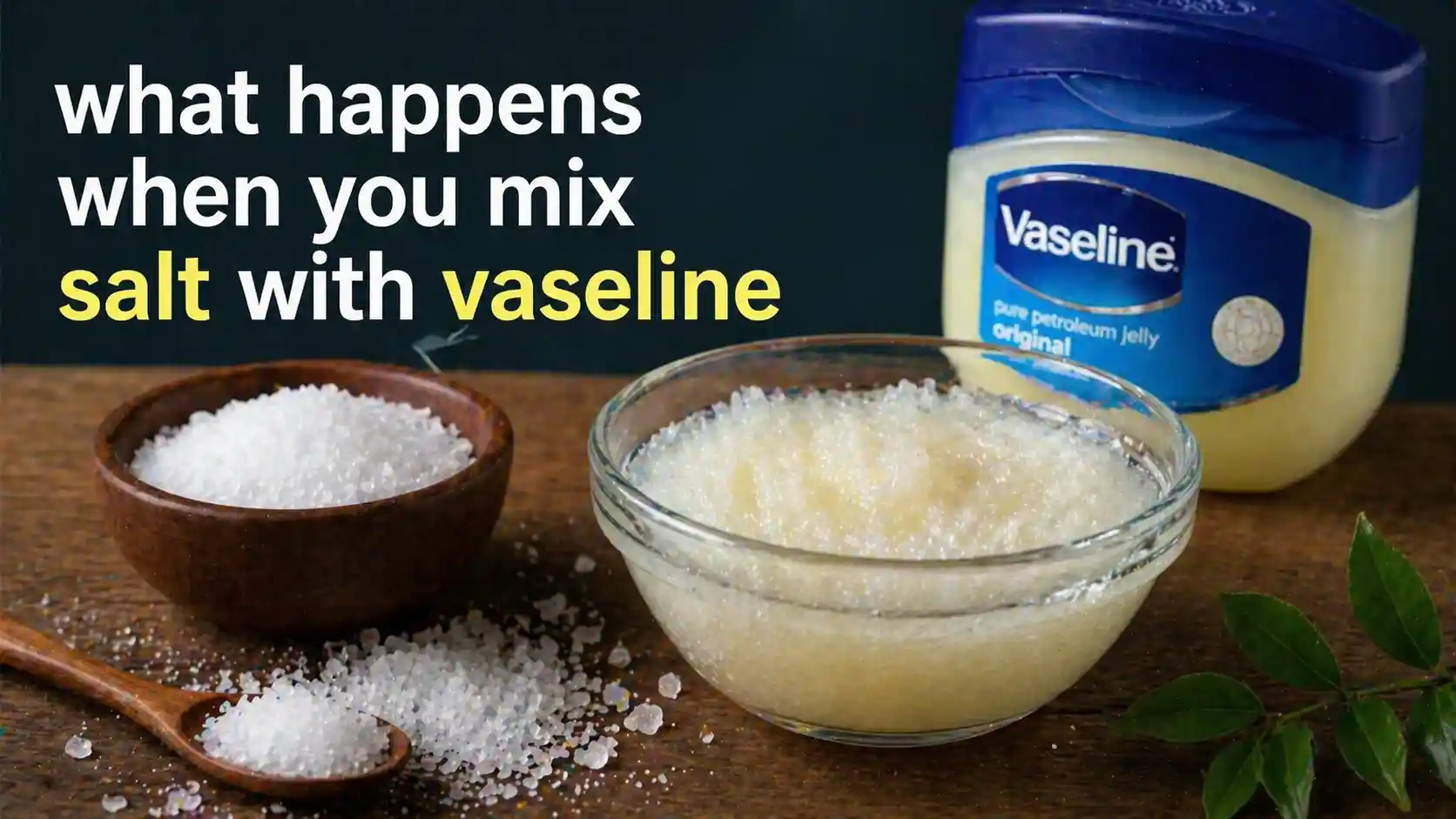
Many people wonder what happens when you mix salt with vaseline and whether it can be useful for skin care. This simple mixture is often talked about online as a home remedy for dry skin, rough areas, and exfoliation. Since both ingredients are easy to find, many people try it at home.
Vaseline helps lock in moisture, while salt has a rough texture that can remove dead skin cells. When combined, they create a scrub-like mixture that may soften certain areas of the skin. However, results can depend on how it is used and your skin type.
What Happens When You Mix Salt With Vaseline
If you are asking what happens when you mix salt with vaseline, the result is a thick, grainy mixture that works like a basic scrub. Vaseline has a smooth, oily texture, while salt is rough and gritty. When you combine them, the salt stays suspended in the Vaseline and creates a paste that can be rubbed onto the skin.
This mixture is commonly used to exfoliate dry or rough areas such as elbows, heels, knees, and hands. The salt helps remove dead skin cells, while Vaseline forms a protective barrier that helps hold moisture in the skin.
How the Ingredients Work Together
- Salt Exfoliates
Salt crystals create friction that can help lift away dry, flaky skin. - Vaseline Moisturizes
Vaseline helps seal in moisture and protect dry skin from further dryness. - Texture Changes
The final mixture becomes thicker than lotion and rougher than plain Vaseline.
What You May Notice After Use
Some people may notice:
- Softer skin on rough spots
- Smoother texture after rinsing
- Temporary hydration from Vaseline
- Cleaner-looking dry areas
Important to Know
This mixture is not ideal for sensitive, broken, or irritated skin. Salt can sting and may cause redness if rubbed too hard. It is usually better for tough skin areas rather than delicate parts of the face.
Easy Answer to Remember
So, what happens when you mix salt with vaseline? You get a homemade exfoliating scrub that may help soften rough skin when used gently and carefully.
Why People Mix Salt With Vaseline
Many people search what happens when you mix salt with vaseline because they are looking for easy home remedies using common household items. Since both ingredients are affordable and easy to find, people often try this mixture for simple skin care needs.
The combination is popular because it brings together exfoliation and moisture in one step. Salt can scrub rough skin, while Vaseline helps soften and protect dry areas.
Common Reasons People Use It
- Dry Skin Relief
People apply it to rough spots like elbows, knees, and heels. - Exfoliation
Salt may help remove dead skin cells from thicker skin areas. - Softer Feet and Hands
Many people use the mixture before bed on cracked heels or dry hands. - Low-Cost Skin Care Option
It uses products that many homes already have. - DIY Beauty Trends
Some online beauty tips recommend it for smoother skin.
Why It Gets Attention Online
This mixture is often shared on social media because it seems simple and inexpensive. Many people like trying quick DIY skin care ideas without buying special products.
Does It Work for Everyone?
Not always. Skin types are different. What feels helpful for one person may irritate another person, especially if they have sensitive skin.
Easy Answer to Remember
People mix these ingredients because they hope to get smoother, softer skin using a simple homemade scrub. That is one big reason so many ask what happens when you mix salt with vaseline online.
Common Uses of Salt and Vaseline Mixture
Many people ask what happens when you mix salt with vaseline because they want to know how the mixture is commonly used. In most cases, people use it as a simple homemade scrub for rough or dry skin areas rather than as a daily face product.
Because salt has a gritty texture and Vaseline helps lock in moisture, the mixture is usually applied to thicker skin that can handle gentle exfoliation.
Popular Ways People Use It
- Dry Heels and Feet
Many people rub the mixture on cracked heels to help smooth rough skin. - Elbows and Knees
These areas often become dry and dark-looking from friction, so people use the scrub there. - Hands
Some use it on dry hands to remove rough patches and add moisture. - Before Lotion or Cream
After exfoliating, people may rinse and apply moisturizer. - Winter Skin Care
Dry weather can cause flaky skin, so some people try this mixture during colder months.
Where It Should Not Be Used Often
Avoid using it on:
- Sensitive facial skin
- Cuts or broken skin
- Sunburned areas
- Irritated or inflamed skin
- Areas with active acne
How Often People Use It
Most people use homemade scrubs occasionally, not every day. Too much scrubbing can irritate the skin.
Easy Answer to Remember
When people ask what happens when you mix salt with vaseline, they usually want to know its uses. Most often, it is used as a scrub for rough areas like feet, elbows, knees, and hands.
Benefits of Mixing Salt With Vaseline
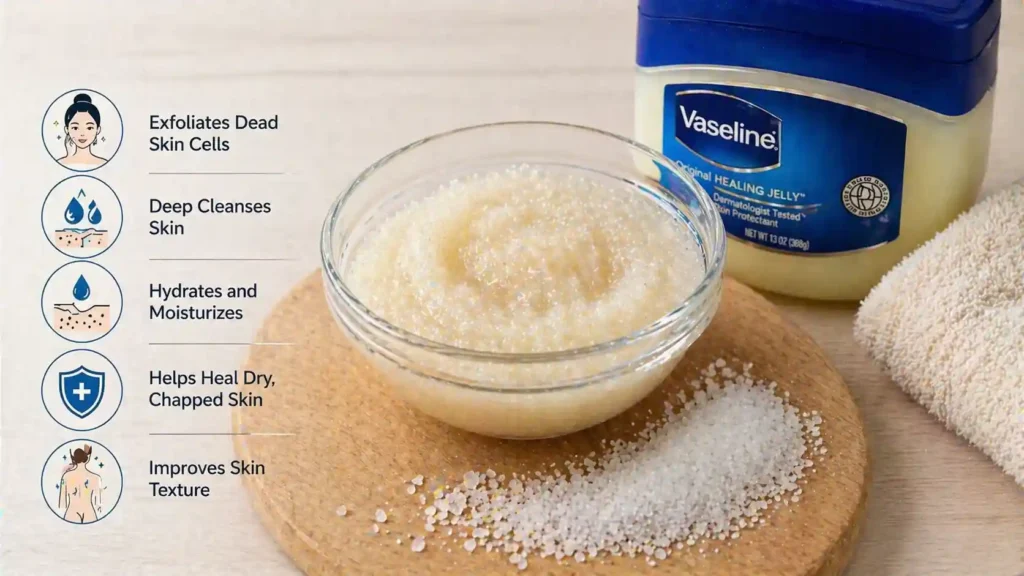
Many people ask what happens when you mix salt with vaseline because they want to know if the mixture offers any real benefits. When used carefully on rough skin areas, it may provide simple skin care benefits by combining exfoliation with moisture protection.
Salt works as a physical scrub, while Vaseline helps seal moisture into the skin. Together, they may improve the feel and appearance of dry areas.
Possible Benefits
- Removes Dead Skin Cells
Salt can help scrub away flaky, rough skin from thicker areas like heels or elbows. - Softens Dry Skin
Vaseline creates a barrier that helps keep moisture in the skin. - Smoother Texture
After gentle use, some people notice smoother skin in rough spots. - Helps Cracked Areas Look Better
Dry feet, hands, or elbows may feel softer after regular moisturizing. - Low-Cost DIY Option
Both ingredients are inexpensive and easy to find in many homes.
Best Areas for Use
This mixture may work better on:
- Feet
- Heels
- Elbows
- Knees
- Hands
Important Note
Benefits depend on skin type and how gently the mixture is used. Scrubbing too hard or using it too often can cause irritation instead of improvement.
Risks of Using Salt With Vaseline on Skin
While some people search what happens when you mix salt with vaseline for benefits, it is also important to understand the risks. Homemade skin mixtures do not work the same for everyone, and some skin types may react badly.
Salt has a rough texture, which can be too harsh for delicate or sensitive skin. Vaseline is generally protective, but mixing it with salt can still cause discomfort if used the wrong way.
Possible Risks
- Skin Irritation
Salt may cause redness, burning, or stinging, especially on sensitive skin. - Micro Scratches
Rubbing coarse salt too hard can create tiny skin damage. - Dryness After Scrubbing
Too much exfoliation can remove natural oils and make skin feel dry. - Breakouts on Some Skin Types
Using heavy products on acne-prone areas may not work well for everyone. - Worse on Broken Skin
Cuts, cracks, or irritated skin may sting badly when salt touches them.
Areas to Be Careful With
Avoid or be extra careful on:
- Face
- Lips with cracks
- Under-eye area
- Sunburned skin
- Freshly shaved skin
How to Lower the Risk
- Use fine salt instead of coarse salt
- Rub gently for a short time
- Test a small area first
- Use it only occasionally
- Stop if irritation starts
Important Reminder
Natural or homemade does not always mean safe for every skin type. If irritation continues, stop using it and consider advice from a skin care professional.
How to Use Salt With Vaseline Safely
If you want to try this mixture after learning what happens when you mix salt with vaseline, it is best to use it carefully. Since salt can be rough on the skin, gentle use is important. This mixture is usually better for rough body areas than for delicate facial skin.
Using the right amount and method can help lower the chance of irritation.
Safe Steps to Follow
- Use a Small Amount
Mix a little Vaseline with a small amount of fine salt in a clean bowl. - Choose the Right Area
Apply it to rough spots like heels, elbows, knees, or hands. - Rub Gently
Massage in small circular motions for a short time. Do not scrub hard. - Rinse Well
Wash the area with warm water and pat dry. - Moisturize After Use
Apply a gentle lotion or plain Vaseline afterward if needed.
How Often to Use It
For most people, once or twice a week is enough. Using it too often may irritate the skin.
Safety Tips
- Do a patch test first
- Avoid cuts or irritated skin
- Stop if burning or redness appears
- Use fine salt instead of large crystals
- Keep the mixture out of eyes
Best Practice
If your skin is sensitive, dry, or easily irritated, a gentle store-bought scrub may be a better option than homemade salt mixtures.
Mistakes to Avoid When Mixing Salt With Vaseline
Many people try this mixture after searching what happens when you mix salt with vaseline, but simple mistakes can lead to irritation or poor results. Using homemade scrubs the wrong way can be harsh on the skin.
Avoiding common mistakes can help protect your skin and make the mixture safer to use.
Common Mistakes
- Using Too Much Salt
Too much salt can make the mixture overly rough and uncomfortable. - Scrubbing Too Hard
Strong rubbing may cause redness, soreness, or tiny skin damage. - Using It on the Face
Facial skin is often more delicate than body skin and may react badly. - Applying on Cuts or Cracks
Salt can sting badly on broken or damaged skin. - Using It Every Day
Frequent exfoliation may irritate the skin and remove natural oils. - Using Coarse Salt
Large salt crystals can be harsher than fine salt. - Ignoring Skin Reactions
If burning, itching, or redness appears, stop using it.
Better Choices
Instead of these mistakes:
- Use fine salt
- Apply gently
- Use only on rough body areas
- Limit use to once or twice weekly
- Follow with moisturizer
Why This Matters
Even simple DIY skin care should be used carefully. Small changes in how you apply the mixture can make a big difference in comfort and results.
When to Avoid Salt and Vaseline Mixture
Even after learning what happens when you mix salt with vaseline, there are times when it is better not to use it. This mixture is not right for every skin type or every situation. In some cases, it may cause irritation instead of helping.
Salt can be rough, and certain skin conditions need gentler care.
Avoid Using It If You Have
- Broken or Cracked Skin
Salt may sting and worsen discomfort. - Sensitive Skin
If your skin reacts easily, this mixture may be too harsh. - Sunburn
Exfoliating sunburned skin can increase irritation. - Active Acne or Inflamed Skin
Scrubbing irritated areas may make them worse. - Fresh Shaving or Waxing
Recently treated skin can be more sensitive. - Skin Allergies or Reactions
If you notice redness or itching, avoid further use.
Better Alternatives
If this mixture is too harsh, consider:
- Gentle fragrance-free moisturizer
- Mild exfoliating scrub made for sensitive skin
- Petroleum jelly alone for dryness
- Soft washcloth exfoliation
- Advice from a skin care professional
When to Stop Immediately
Stop using it if you feel:
- Burning
- Sharp stinging
- Swelling
- Strong redness
- Rash or itching
Final Thought
Not every DIY trend works for everyone. If your skin is irritated or delicate, choosing gentler skin care options is often the better choice.
FAQs
1. Is it safe to mix salt with Vaseline?
It can be safe for some people when used gently on rough body areas like heels or elbows. However, sensitive or damaged skin may become irritated.
2. Can salt and Vaseline exfoliate skin?
Yes, salt can help remove dead skin cells while Vaseline helps lock in moisture. It works like a basic homemade scrub.
3. Can I use salt and Vaseline on lips?
It is best to be careful. Lips are delicate, and salt may sting or irritate dry or cracked lips.
4. How often should I use salt with Vaseline?
Most people should use it only once or twice a week. Daily use may be too harsh for the skin.
5. Does salt and Vaseline lighten skin?
No, this mixture does not truly lighten skin. It may temporarily improve dull or rough skin by removing dead skin cells.
Conclusion
Now you know what happens when you mix salt with vaseline. The mixture creates a simple homemade scrub that combines exfoliation from salt with moisture protection from Vaseline. Some people use it on rough areas like heels, elbows, knees, and hands to help soften dry skin.
However, this mixture is not right for everyone. Sensitive, broken, or irritated skin may react badly, especially if scrubbed too hard or used too often. The safest approach is gentle use, patch testing, and limiting it to tougher body areas. If irritation happens, stop using it and choose a milder skin care option.
