


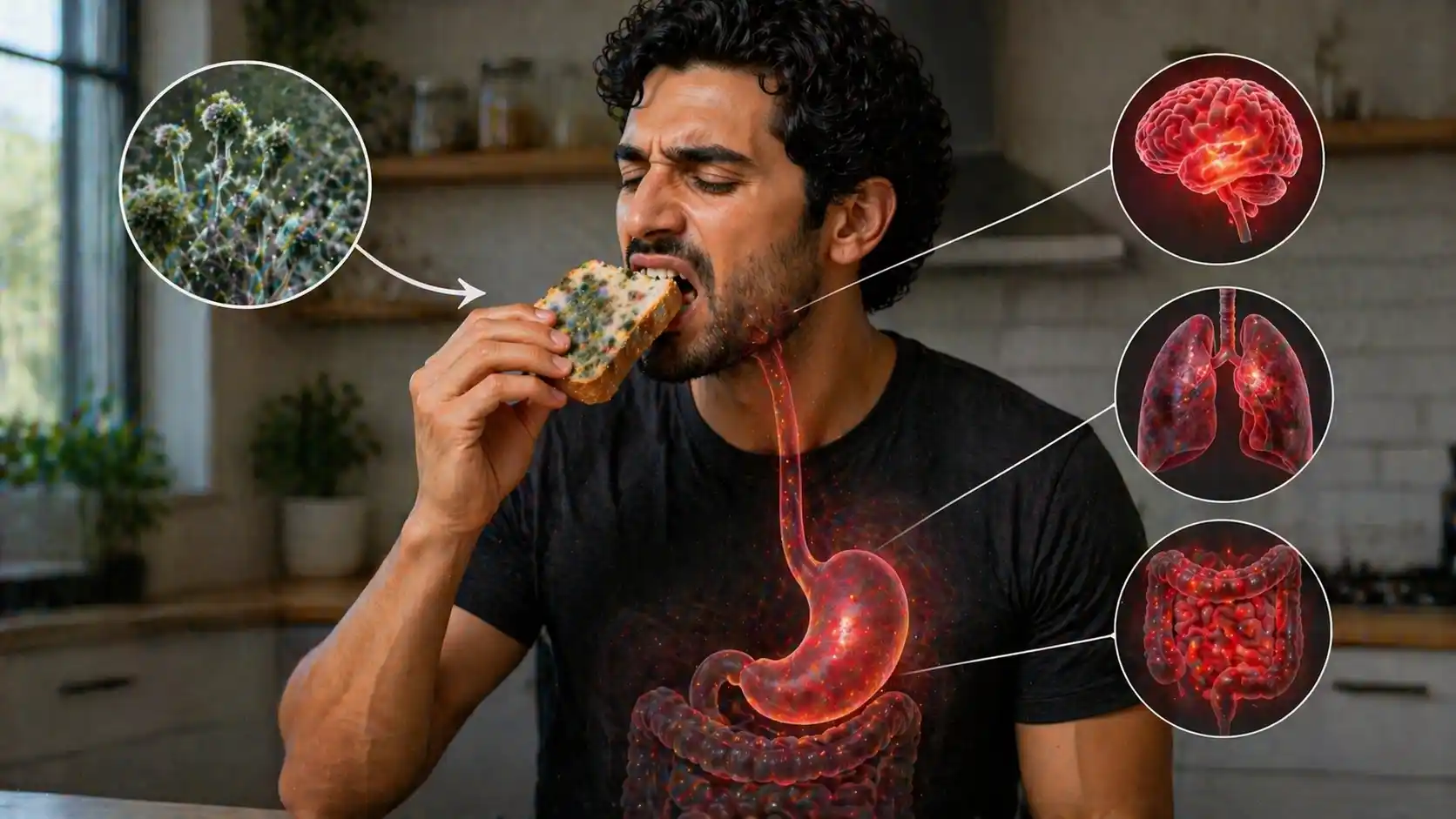
Many people have taken a bite of food and then noticed something strange afterward. Maybe the bread looked fine at first, or the fruit had a small fuzzy spot. This leads to a common question: what happens if you eat mold?
In many cases, eating a small amount of mold may not cause serious harm. But sometimes it can lead to stomach problems, allergic reactions, or other health issues depending on the type of mold and the person eating it.
The good news is that not every situation is an emergency. In this article, we’ll explain in simple words what can happen, when to worry, and what to do next.
What Happens If You Eat Moldy Bread?
Bread is one of the most common foods where mold appears quickly. If you accidentally eat a small amount, it may not always cause serious harm. Still, many people worry about what happens if you eat mold?, especially when it comes to bread.
The effect depends on the type of mold, how much you ate, and your health condition.
What Can Happen:
- No symptoms at all
Some people may feel completely fine. - Mild stomach upset
You may feel nausea or discomfort. - Bad taste or smell
Moldy bread can leave an unpleasant taste. - Allergic reaction in some people
Sensitive people may react more strongly.
This explains what happens if you eat moldy bread in many cases—it is often mild, but it should still be taken seriously.
What Happens If You Eat Mold?
Eating mold does not always cause a serious problem, but it can affect people in different ways. To understand what happens if you eat mold, it usually depends on the type of mold, how much was eaten, and your overall health.
Some people may feel nothing, while others may develop symptoms soon after.
Common Effects:
- No reaction
A small amount may not cause symptoms. - Stomach discomfort
Nausea, cramps, or vomiting can happen. - Allergy symptoms
Sneezing, coughing, or irritation may occur. - Food poisoning risk
Some molds can produce harmful substances.
This shows what happens if you eat mold? can range from no issue at all to stronger reactions in some cases.
Possible Symptoms After Eating Mold
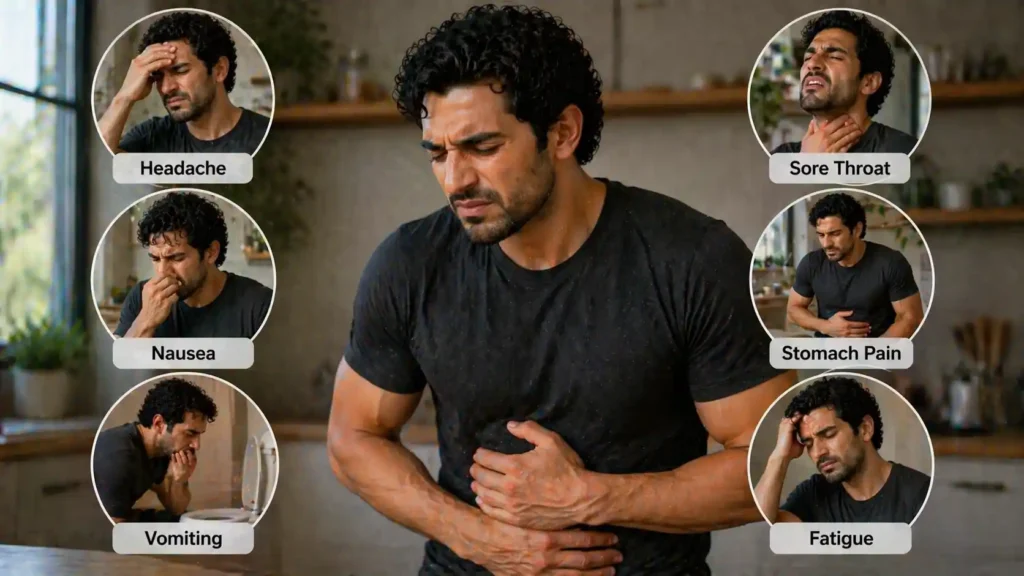
Symptoms can be mild or stronger depending on the person and the type of mold. This is an important part of what happens if you eat mold?, because not everyone reacts the same way.
Some people may feel fine, while others notice discomfort within hours.
Possible Symptoms:
- Nausea
A common reaction after eating spoiled food. - Stomach pain or cramps
The digestive system may become irritated. - Vomiting or diarrhea
This can happen if the body reacts strongly. - Allergy symptoms
Sneezing, coughing, itching, or trouble breathing in sensitive people.
These symptoms also help explain what happens if you eat moldy bread, since bread mold can cause similar reactions.
When You Should Seek Medical Help
Most cases are mild, but some situations need medical attention. This is an important part of what happens if you eat mold?, especially if symptoms become stronger or do not improve.
It is better to get help if you feel very unwell.
Get Medical Help If You Have:
- Trouble breathing
This may be a serious allergic reaction. - Severe vomiting or diarrhea
This can lead to dehydration. - Strong stomach pain
Ongoing pain should not be ignored. - Symptoms that last a long time
If you do not feel better, contact a doctor.
This can also apply to what happens if you eat moldy bread, especially for children, older adults, or people with weak immune systems.
How to Avoid Eating Moldy Food
The best way to avoid health problems is to prevent moldy food from being eaten in the first place. This helps lower the risk of what happens if you eat mold.
Simple habits can make a big difference.
Easy Prevention Tips:
- Check food before eating
Look for fuzzy spots, bad smell, or strange color. - Store food properly
Keep bread, fruit, and leftovers in the right place. - Throw away moldy items
Do not eat food with visible mold unless it is a food meant to have mold. - Use food before it expires
Older food has a higher chance of mold growth.
These steps also help prevent what happens if you eat moldy bread, which is one of the most common cases at home.
FAQs
1. What happens if you eat mold by accident?
You may feel nothing at all, or you could have mild stomach upset or nausea.
2. What happens if you eat moldy bread?
Many cases are mild, but it can cause nausea, cramps, or allergic reactions in some people.
3. Can eating mold make you sick?
Yes, some molds can cause digestive problems or other reactions.
4. Should I make myself vomit after eating mold?
No, unless a doctor tells you to. Drink water and monitor symptoms.
5. When should I see a doctor after eating mold?
Seek help if you have trouble breathing, severe vomiting, or ongoing symptoms.
Conclusion
Eating a small amount of mold does not always cause serious harm, but it can lead to stomach upset, allergy symptoms, or discomfort in some people. The reaction often depends on the type of mold and your health.
Understanding what happens if you eat mold? helps you stay calm and make smart choices. If symptoms are severe or last a long time, it is best to seek medical advice.
